 Skin cancer awareness is crucial, as skin cancer is the most common form of cancer in the United States, affecting millions each year. While it can be life-threatening if left untreated, early detection and proper care significantly increase the chances of successful treatment. At Peninsula Dermatology Skin Cancer Surgery Center in Newport News and Williamsburg, VA, we are dedicated to raising skin cancer awareness by educating about prevention, early detection and treatment options.
Understanding Skin Cancer
Skin cancer awareness begins with understanding how it develops. Skin cancer occurs when abnormal skin cells grow uncontrollably, often due to excessive sun exposure or ultraviolet (UV) radiation from artificial sources like tanning beds. The primary categories of skin cancer are:
- Basal Cell Carcinoma (BCC): The most common type, typically appearing as a pearly or waxy bump on sun-exposed areas like the face and neck.
- Squamous Cell Carcinoma (SCC): This form can develop as a scaly or crusted patch and may spread if left untreated.
- Melanoma: The most aggressive type, melanoma can develop in existing moles or appear as a new, unusual growth. Skin cancer awareness emphasizes that early detection is crucial for successful treatment.
Prevention: Protecting Your Skin
The best way to reduce the risk of skin cancer is through prevention. Skin cancer awareness includes following these essential tips to protect your skin from harmful UV radiation:
- Use Sunscreen Daily: Choose a broad-spectrum sunscreen with an SPF of 30 or higher and apply it generously to all exposed skin. Apply again every two hours, and right after swimming or heavy sweating.
- Seek Shade: Avoid direct sun exposure, particularly between 10 AM and 4 PM when UV rays are the strongest.
- Wear Protective Clothing: Long sleeves, wide-brimmed hats and UV-blocking sunglasses provide additional protection.
- Avoid Tanning Beds: Artificial UV exposure significantly increases the risk of skin cancer.
- Regular Skin Checks: Perform self-exams monthly to monitor for any new or changing skin lesions. Skin cancer awareness promotes routine self-examinations as a proactive step.
Early Detection: Recognizing Warning Signs
Early detection of skin cancer can be lifesaving. Skin cancer awareness campaigns often highlight the ABCDE rule to help identify suspicious moles or growths:
- A – Asymmetry: One half of the mole doesn’t match the other.
- B – Border: Irregular, blurred or notched edges.
- C – Color: Multiple shades of brown, black, red, white or blue.
- D – Diameter: Greater than 6mm (about the size of a pencil eraser).
- E – Evolving: Any change in size, shape or color over time.
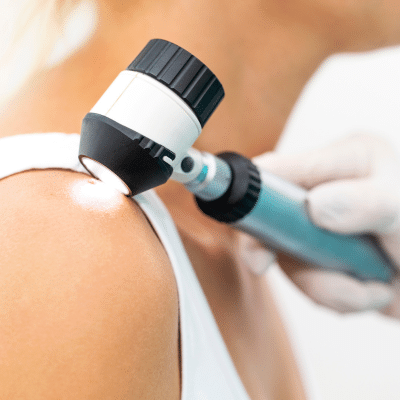
If you notice any of these signs, schedule a skin examination with a dermatologist immediately. Skin cancer awareness means acting promptly when changes are detected.
Treatment Options for Skin Cancer
When detected early, skin cancer is highly treatable. Skin cancer awareness also involves understanding the available treatment options, which may include:
- Cryotherapy: Freezing precancerous or small cancerous lesions with liquid nitrogen.
- Topical Medications: Prescription creams that stimulate the immune system to fight cancer cells.
- Excisional Surgery: Excising the cancerous tissue along with a surrounding layer of healthy skin.
- Mohs Surgery: A precise technique used for certain types of skin cancer, especially in cosmetically sensitive areas like the face.
- Radiation Therapy: Used for cases where surgery may not be an option.
- Targeted Therapy and Immunotherapy: Advanced treatments for aggressive skin cancers like melanoma.
The Importance of Regular Dermatology Checkups
Routine dermatology visits are essential for early skin cancer detection and prevention. Skin cancer awareness encourages scheduling regular checkups, as professional skin exams can identify precancerous changes before they become serious. At Peninsula Dermatology Skin Cancer Surgery Center in Newport News and Williamsburg, VA, our team of experts is committed to promoting skin cancer awareness and providing comprehensive skin care, from preventive screenings to advanced treatment options.
Request Your Consultation in Newport News or Williamsburg, VA Today
Skin cancer awareness is key to reducing the impact of this disease. By protecting your skin, performing regular self-exams and scheduling professional screenings, you can significantly lower your risk. If you notice any concerning skin changes, don’t hesitate to request a consultation. Early detection and treatment save lives.
For more information or to schedule a skin cancer screening, contact Peninsula Dermatology Skin Cancer Surgery Center today and join us in spreading skin cancer awareness.